Pollution Prevention
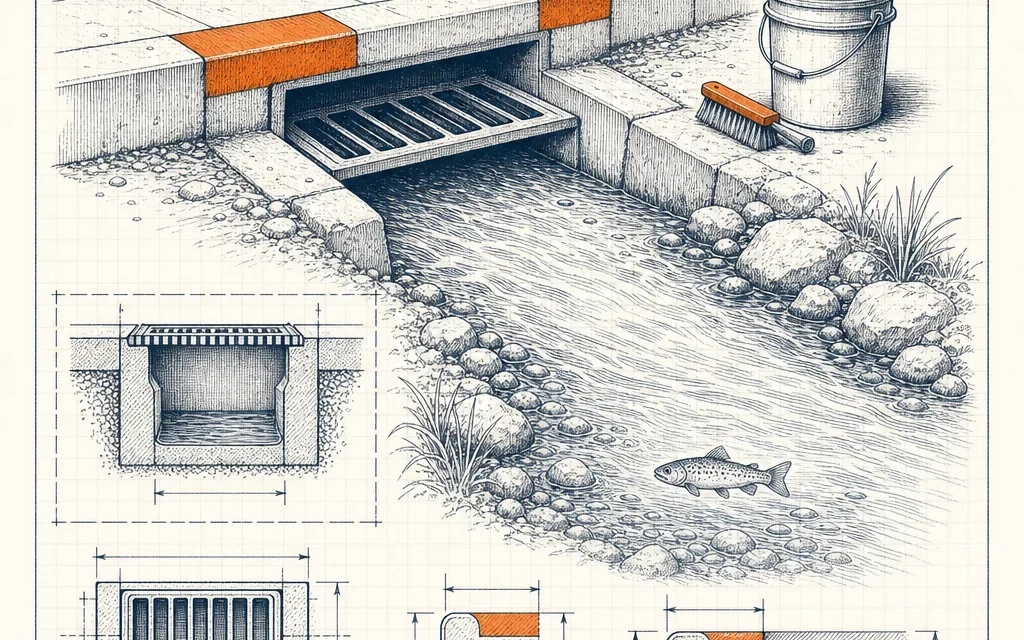
Pollution prevention is the least expensive category of stormwater practice a community can deploy, because it intercepts pollutants before they ever reach a pipe, pond, or filter. Every structural practice in a watershed — every pond, wetland, and bioretention cell — treats runoff after it has already picked up its load of nutrients, metals, hydrocarbons, sediment, chloride, and bacteria. Source control works one step earlier: it changes the everyday municipal operations, business practices, and household habits that put those pollutants on the pavement in the first place.
The fact sheets in this section cover the full source-control toolbox for a municipal stormwater program. They fall into three broad groups: practices a public-works department carries out directly (catch basin cleaning, street sweeping, storm drain maintenance, salt management), practices that target commercial and fleet operations (fueling, loading docks, spill response, vehicle maintenance), and practices that depend on resident behavior (car washing, lawn care, pet waste, septic care, used oil disposal). Each sheet describes the pollution pathway, the operative recommendations with real costs and frequencies where they are documented, implementation notes for program managers, and what the available monitoring data say about effectiveness. To translate the pollutant concentrations discussed throughout these pages into annual loads for a specific drainage area, use the Simple Method runoff calculator.
Municipal operations
Catch Basin Cleaning
Sump cleanout schedules, costs per basin, and what trapped sediment is actually worth in pollutant removal.
FS 01
Storm Drain Maintenance
Inspection, pipe flushing, outfall cleaning, and the maintenance windows that matter before the wet season.
FS 02
Parking Lot and Street Cleaning
Sweeper technology compared — mechanical broom, vacuum, regenerative air — with frequencies and curb-mile costs.
FS 03
Road Salt and De-icing
Chloride control through spreader calibration, anti-icing brine, smarter storage, and alternative deicers.
FS 04
Illegal Dumping Control
Storm drain stenciling, hotlines, surveillance, and enforcement against dumping into drains and channels.
FS 05
Sanitary Sewer Overflows
Why sewers overflow — grease, roots, infiltration — and the CMOM programs that prevent raw sewage releases.
FS 06
Commercial and fleet operations
Vehicle Fueling
Canopies, graded fueling pads, spill-stop nozzles, and dry cleanup at gas stations and fleet yards.
FS 07
Vehicle Maintenance
Keeping oil, antifreeze, and brake fluid out of runoff at repair shops and in residential driveways.
FS 08
Outdoor Loading and Unloading
Dock covers, dead-end sumps, and run-on control where materials are transferred outdoors.
FS 09
Spill Prevention and Control
Secondary containment, spill kits, response sequences, and the reporting thresholds every site should post.
FS 10
Used Oil Recycling
Collection programs for do-it-yourself oil changers — one gallon of used oil can foul about a million gallons of water.
FS 11
Residential behavior
Residential Stewardship
The umbrella view: how household habits add up across a subwatershed, and how outreach changes them.
FS 12
Car Washing
Driveway and charity car washes send detergent, metals, and hydrocarbons straight to the nearest stream.
FS 13
Landscaping and Lawn Care
Fertilizer rates, soil testing, pesticide alternatives, and landscaping that needs less of everything.
FS 14
Pet Waste and Water Quality
Bacteria source tracking regularly points at pets; collection programs and ordinances that work.
FS 15
Septic System Care
Inspection and pump-out schedules that keep failing drainfields from becoming bacteria and nutrient sources.
FS 16
How to use these fact sheets
Program managers assembling a stormwater plan rarely fund every practice at once. A defensible sequence starts with the municipal operations group — those practices run on equipment and budgets the public-works department already controls, and they demonstrate good faith under an MS4 permit. Commercial practices follow, typically attached to inspection programs and industrial permit requirements. Residential outreach comes last not because it matters least, but because behavior change takes the longest to show results and works best once the municipality can point to its own housekeeping as the example. Communities that monitor before and after implementation consistently find that no single source-control practice transforms water quality on its own; the value is cumulative, and the cost per pound of pollutant prevented is usually far below the cost per pound removed by structural treatment.